




Camping is a great way to get away from the rush and bustle of everyday life, but the heat can be a real challenge. A camping air conditioner is particularly useful in this situation. Whether you're in a tent or a camper, having a good cooling system can make all the difference. It provides comfort, promotes restful sleep, and allows you to fully enjoy the great outdoors without succumbing to the hot weather.
Choosing the appropriate air conditioner for your camping needs is critical. There are various sorts of air conditioners, each with pros and downsides. To make an informed conclusion, you must first grasp your camping setup's individual requirements. Portability, energy usage, and ease of installation are all important considerations while making this decision.
In this guide, we'll look at two popular types of camping air conditioners: portable and window. We hope to assist you decide which option is best for your camping experiences by reviewing their features, benefits, and restrictions.
Overview of Portable Air Conditioners
Portable air conditioners, or Portable ACs, are versatile cooling units designed for easy movement and installation. They typically come with wheels, allowing you to shift them from one spot to another with minimal effort. This feature makes them particularly appealing for camping, where flexibility is often a necessity.
These units usually consist of a single body that houses the compressor, evaporator, and condenser. A hose is used to vent the hot air outside, often through a window or a specially designed vent. Portable air conditioners are available in various sizes and cooling capacities, making it possible to find one that perfectly suits your camping needs.
Overview of Window Air Conditioners
Window air conditioners, on the other hand, are intended to be fitted in a window or a specifically created opening in a wall. Window air conditioners, unlike portable units, have a more permanent installation, which can be both a benefit and a disadvantage depending on your camping situation.
These units contain all the components required for cooling within a single box. They draw in warm air from the room, cool it, and then release the cooled air back into the space. The hot air is expelled outside, making the window air conditioner a highly efficient cooling option.
The main advantage of window air conditioners is their efficiency. They often consume less energy than portable units and can chill greater areas more efficiently. However, their installation can be more difficult, particularly in non-standard window frames or when there is no simple window access.

Key Differences Between Portable and Window Air Conditioners
Understanding the key differences between portable and window air conditioners is essential for making the right choice for your camping needs. These differences primarily revolve around installation, portability, and efficiency.
-
Installation: Portable air conditioners require minimal installation. They only need a venting outlet for the exhaust hose, which can be set up in a matter of minutes. Window air conditioners, however, need to be securely installed in a window or a wall, which can require tools and adjustments.
-
Portability: As the name suggests, portable air conditioners are designed for easy movement. They come with wheels and handles, making them ideal for camping where you might need to move the unit frequently. Window air conditioners are stationary once installed, which can be a drawback if flexibility is required.
-
Efficiency: Window air conditioners generally offer better energy efficiency than their portable counterparts. They are designed to cool rooms more effectively and use less power, which can be a significant advantage if you're camping in an area with limited electricity supply.
Benefits of Using a Portable Air Conditioner for Camping
The benefits of using a portable air conditioner for camping are numerous, especially for those seeking flexibility and convenience. Here are some reasons why a tent air conditioner might be the perfect choice for your outdoor adventures.
Flexibility and Convenience
Portable air conditioners provide unmatched flexibility. You can easily move them to different locations within your camping setup, ensuring optimal cooling wherever you need it most. This adaptability is particularly useful in larger camping areas or when you're setting up camp in various locations.
Easy Setup and Operation
Setting up a portable air conditioner is typically a straightforward process. You only need to find a suitable venting outlet for the exhaust hose and plug it into a power source. This simplicity means you can quickly enjoy a comfortable environment without the hassle of complex installations.
Compact and Space-Saving
Portable air conditioners are designed to be compact, making them ideal for the limited space available in tents or small campers. They won't take up much room, allowing you to maximize your living area while still enjoying the benefits of a cooling system.
Factors to Consider When Choosing an Air Conditioner for Camping
When selecting a camping air conditioner, it's important to consider several factors to ensure you choose the best option for your needs. Here are some key considerations:
Cooling Capacity
Cooling capacity is crucial when choosing an air conditioner. Measured in BTUs (British Thermal Units), the cooling capacity determines how effectively the unit can cool a given area. Ensure you choose a unit with an appropriate BTU rating for your tent or camper size to achieve optimal results.
Energy Consumption
Energy consumption is another critical factor, especially if you're camping in an area with limited power supply. Look for units with energy-efficient ratings to minimize power usage while maximizing cooling effectiveness. This consideration can help you save on energy costs and extend the life of your power sources.
Noise Level
Camping is often about enjoying the peace and tranquility of nature, so the noise level of your air conditioner is worth considering. Check the decibel rating of the unit to ensure it won't disrupt your relaxation or sleep. Many modern units offer quiet operation modes, which can be beneficial.
Energy Efficiency and Cost Analysis
Energy efficiency and cost are vital considerations when choosing a camping air conditioner. Both portable and window units have their advantages, but understanding their energy usage can guide your decision.
Portable Air Conditioners
Portable air conditioners are generally less energy-efficient than window units. However, they offer flexibility and convenience, which can justify the slightly higher energy consumption. To improve efficiency, look for models with Energy Star ratings or energy-saving features.
Window Air Conditioners
Window air conditioners are known for their superior energy efficiency. They often use less power and can cool larger areas more effectively. While the initial setup may be more challenging, the long-term energy savings can be significant, making them a cost-effective choice for extended camping trips.
Cost Comparison
When comparing costs, consider both the initial purchase price and ongoing energy expenses. Portable air conditioners might be less expensive upfront, but their higher energy consumption can lead to increased utility costs over time. Conversely, window air conditioners may have a higher initial cost but offer savings in energy usage.
Why a Portable Air Conditioner Designed for Camping Makes a Difference
While understanding the differences between portable and window air conditioners is important, choosing a unit specifically designed for camping can make an even bigger impact on comfort and convenience.
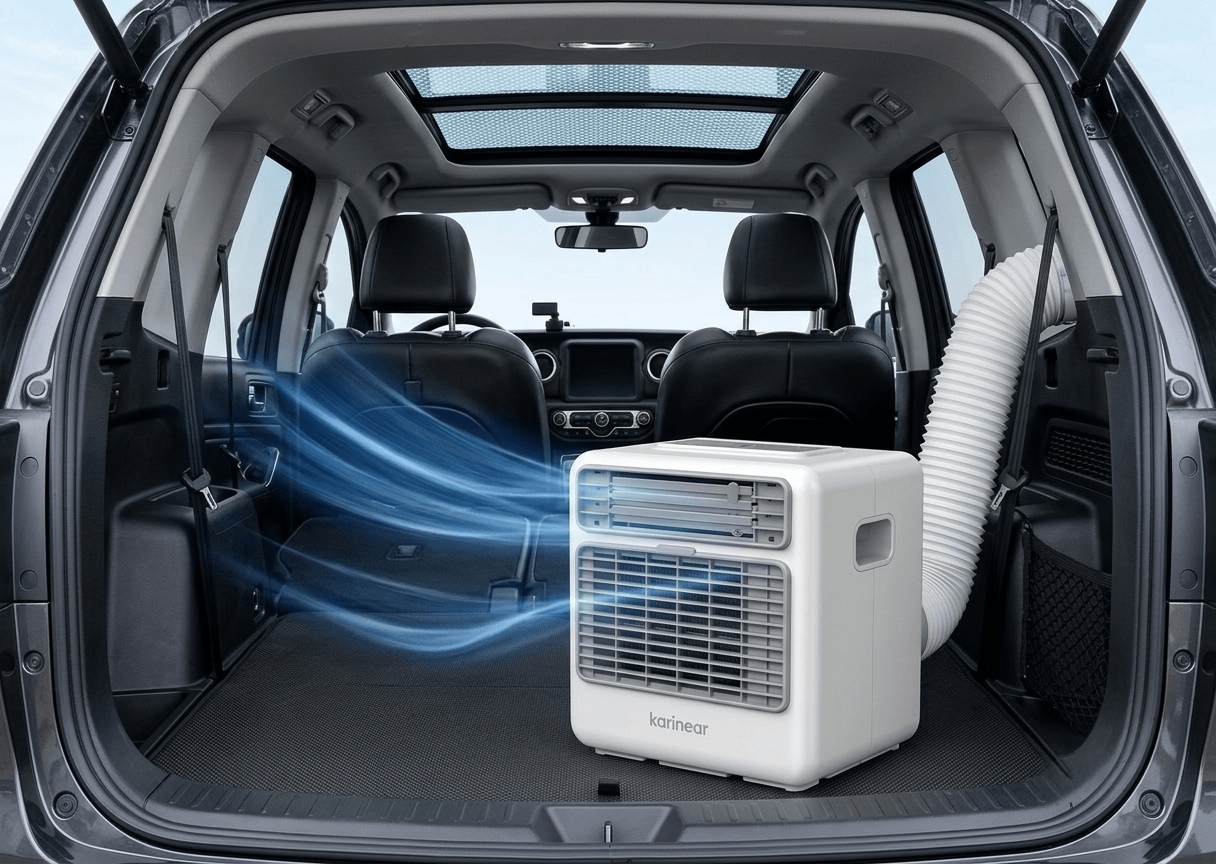
The Karinear Portable Air Conditioner is built with outdoor use in mind, making it an excellent solution for campers, RV travelers, and off-grid adventurers who need reliable cooling in compact spaces.
Key Advantages of the Karinear Portable Air Conditioner
Portable and Easy to Transport
Unlike traditional window air conditioners, the Karinear Portable Air Conditioner features a compact design that is easy to carry, store, and move between locations. Whether you're camping in a tent, RV, van, or cabin, setup is quick and hassle-free.
Efficient Cooling for Small Spaces
Designed for personal and small-space cooling, it delivers effective temperature control for tents, RV sleeping areas, and compact camping setups without requiring permanent installation.
Flexible Power Options
For campers using campsites with electricity or portable power stations, the unit offers a practical cooling solution that can help maintain comfort during hot summer days and warm nights.
Simple Installation
No window frame modifications or complicated mounting hardware are required. Simply position the unit, connect the exhaust hose if needed, and start cooling.
Conclusion: Which Air Conditioner is Best for Your Camping Needs?
Finally, the ideal camping air conditioner for you will be determined by your own requirements and tastes. If you value flexibility and convenience of installation, a portable air conditioner may be the best option. Its portability and simple installation make it ideal for campers who regularly change destinations.
If you prioritize energy efficiency and cooling power, a window air conditioner may be a better option. Despite the more difficult installation, its capacity to properly chill larger places can be a substantial benefit, particularly for extended camping trips.
Finally, while deciding whether to use a portable or window air conditioner, consider your camping area, energy availability, and personal choice. Either option can greatly improve your camping experience, keeping you cool and comfortable in the great outdoors.