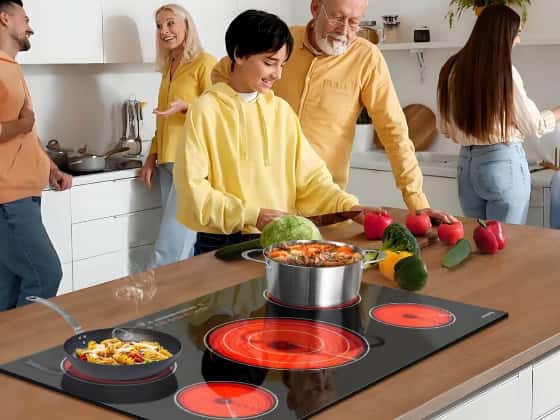
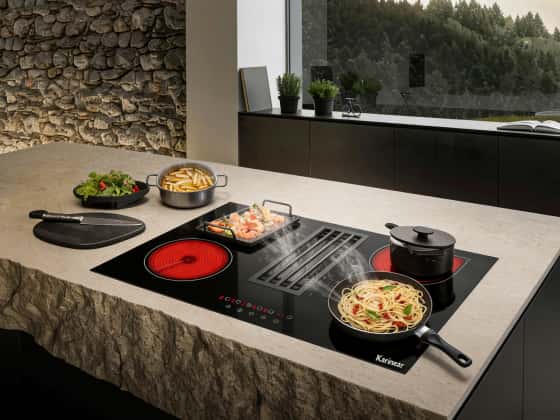



Choosing between a 24 inch and 30 inch electric cooktop is not simply a question of buying the largest appliance that fits. The right size depends on the usable counter space, the cookware you use together, how many dishes you cook at once, and the electrical capacity planned for the kitchen.
Both sizes can deliver a smooth ceramic-glass surface, multiple heat levels, and the freedom to use flat-bottom cookware made from materials that induction may not accept. The difference is how the cooking zones fit into your daily routine.
The Quick Answer: Who Should Choose Each Size?
Choose a 24 inch electric cooktop if you want four-zone capability in a compact footprint, usually cook for one to four people, or need to preserve prep space in an apartment, ADU, condo, guest suite, or smaller home.
Choose a 30 inch electric cooktop if you frequently use wide skillets, stockpots, griddles, or four to five vessels at once. The extra width also gives handles more room and makes it easier for two people to cook together.
If both sizes fit, base the final decision on your busiest real meal rather than your simplest weekday dinner.
Compare the Actual Product and Cutout Dimensions
The label “24 inch” or “30 inch” describes a size class, not the exact outside or cutout measurement. For example, many Karinear 24 inch models have an overall width close to 23.2 inches, while many 30 inch models are approximately 30.3 inches wide. Cutout requirements vary by model.
Before ordering:
• Measure the existing opening at the front, middle, and rear.
• Check the countertop depth and the space below the counter.
• Confirm the minimum clearances in the installation manual.
• Check whether drawers, a wall oven, cabinet rails, or a junction box occupy the space below.
• Use the selected model's specification sheet, not the nominal size, for cabinet work.
Never assume a new cooktop will drop into an old opening just because both are sold as the same width.

How Much Cooking Space Do You Really Need?
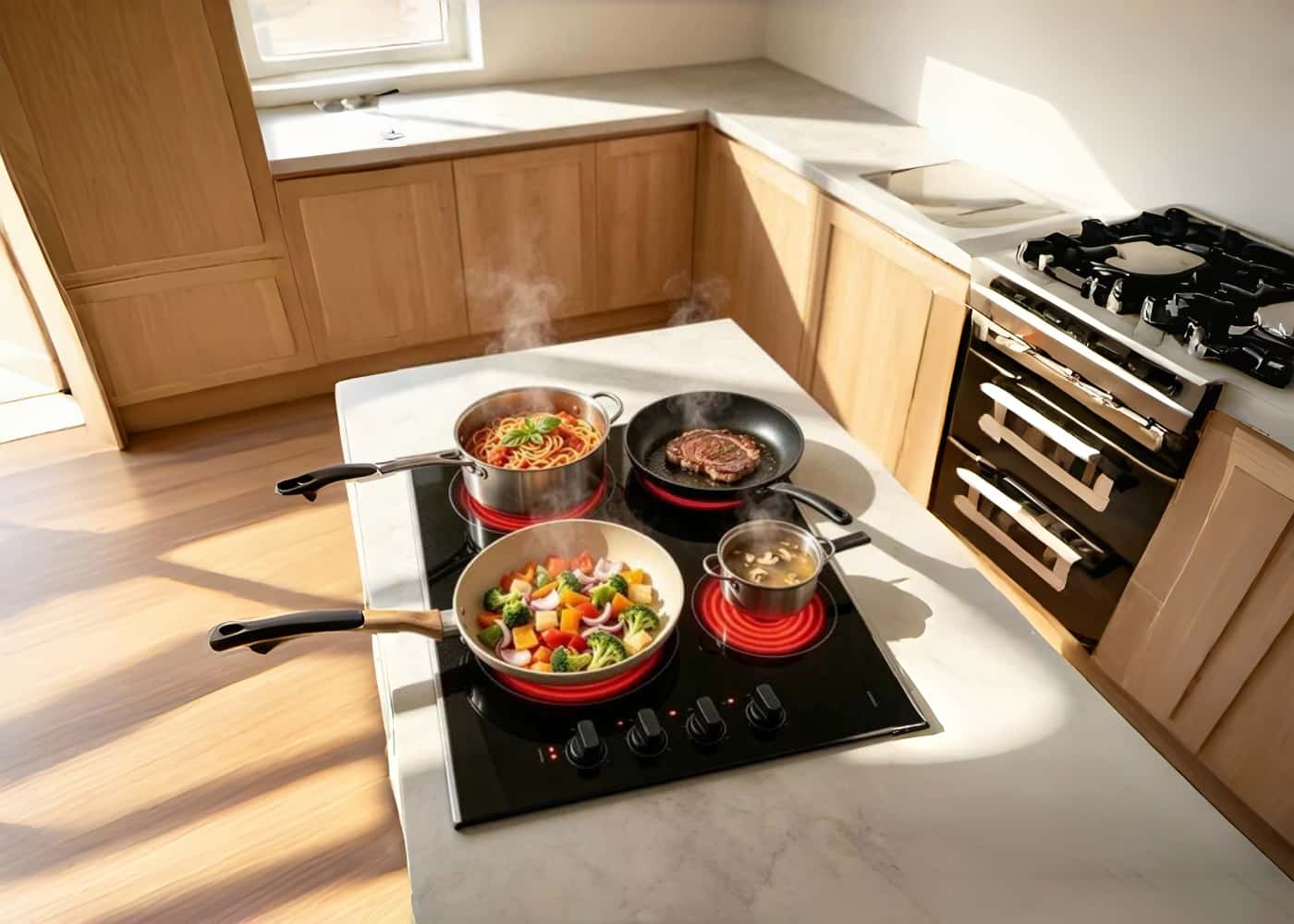
A 24 inch four-burner cooktop can handle a complete meal, but cookware selection matters. Two medium pans, a saucepan, and a small pot may fit well; four wide skillets probably will not. A 30 inch surface provides more separation and may include a fifth zone, a larger center element, or expandable zones for oversized cookware.
Try a simple “paper-pan test.” Cut paper circles matching the base diameter of the pans you use most. Arrange them inside a 23-inch-wide rectangle and then a 30-inch-wide rectangle. Include the control area and leave room for handles. This reveals more than burner count alone.
Compare Burner Layout, Not Just Burner Count
Two cooktops with four zones can feel completely different. Look at:
• Zone diameter: Match the heated area closely to the flat base of the pan.
• Zone position: A large front zone is useful for active frying; a large rear zone may be better for a stockpot.
• Expandable rings: Dual- or triple-ring zones adapt to different pan sizes.
• Bridge function: Linked zones can support an appropriate flat-bottom griddle or long pan.
• Control location: Front controls are easy to reach, while side controls may preserve center workspace.
A flexible 30 inch four-zone model may serve a griddle user better than a basic five-zone model. Likewise, a well-planned 24 inch layout may be more useful than a larger surface with zones that do not match your cookware.
Power and Electrical Planning
Many built-in 24 inch and 30 inch ceramic cooktops operate on 220–240V and require hardwiring. Total rated power often increases with surface size and zone count, but specifications vary significantly by model. Karinear examples range from roughly 6000W on several 24 inch models to 8400W, 8500W, or 9000W on selected 30 inch models.
Higher total wattage can support more high-power zones at the same time. It does not mean every meal automatically cooks faster. Pan contact, zone size, power setting, and cooking method still matter.
Have a qualified electrician verify the supply, breaker, wiring, grounding, and local code requirements for the exact model. Do not select a breaker from a generic blog or from wattage alone.
Counter Space vs Cooking Space
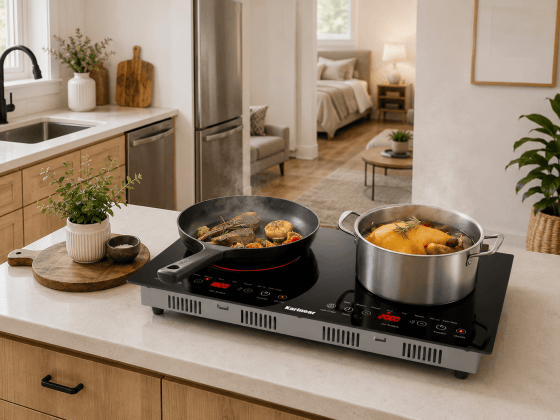
In a compact kitchen, six inches of saved counter width can become a valuable landing or prep area. That can make a 24 inch cooktop the more efficient choice even when a 30 inch model technically fits.
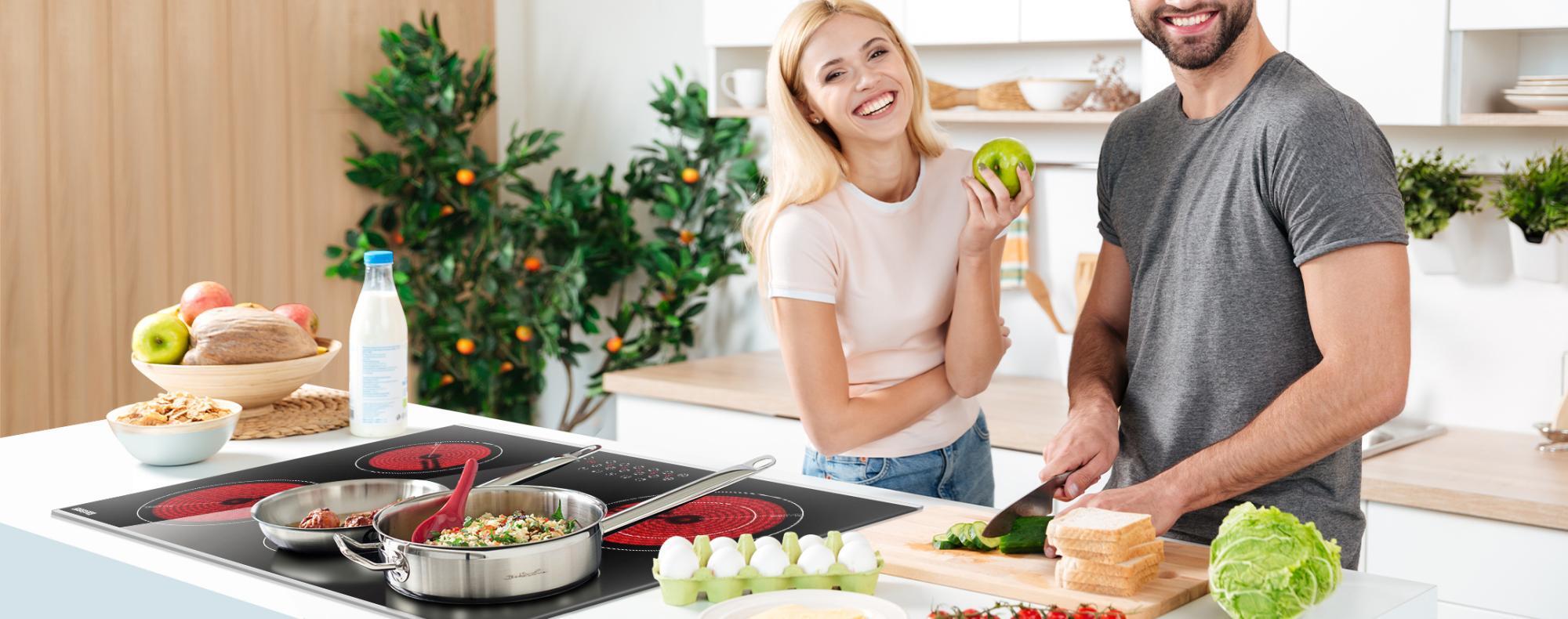
In a busy family kitchen, the 30 inch surface may reduce pan collisions and let one zone simmer while the others boil, sauté, and keep food warm. The benefit is not only “one more burner”; it is less friction during the busiest 20 minutes of cooking.
A Five-Question Decision Checklist
1. Which two or three pans do you use together most often?
2. How many cooking zones are active during your busiest weekly meal?
3. Is prep space or burner separation more valuable in this kitchen?
4. Does the selected model fit the exact cutout and under-counter space?
5. Can the electrical system support the model according to its manual and local code?
If your paper-pan test fits comfortably at 24 inches and you value counter space, choose the compact size. If handles collide, large pans overlap the controls, or you regularly need a fifth task, a 30 inch cooktop is the better long-term fit.
Final Recommendation
The best cooktop is the smallest size that handles your busiest normal meal without crowding. For compact kitchens, explore Karinear 24 inch electric cooktops with three- and four-zone layouts. For larger households, multi-pot cooking, or flexible bridge and expandable zones, compare the Karinear 30 inch electric cooktop range.
Frequently Asked Questions
Can a 24 inch electric cooktop have four burners?
Yes. Several Karinear 24 inch ceramic cooktops use four zones in a compact layout. Pan-base diameter and handle clearance determine whether all four are practical for your cookware at the same time.
Is a 30 inch cooktop the standard size?
Thirty inches is a common size in North American kitchens, but “standard” does not guarantee an exact fit. Always compare the model's outside dimensions, cutout dimensions, clearances, and electrical requirements.
Should I enlarge my countertop opening for a 30 inch model?
Only after selecting the exact appliance and reviewing its installation specifications. Countertop changes should be planned by qualified tradespeople, especially for stone surfaces.