
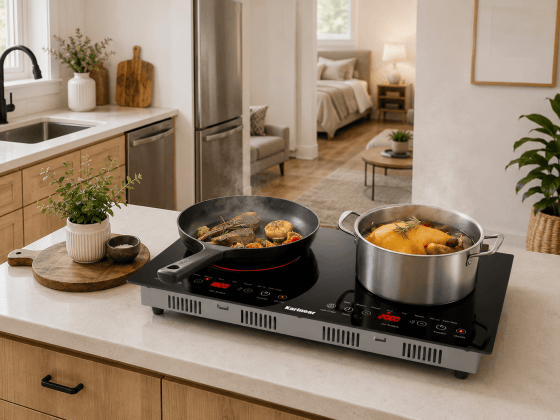

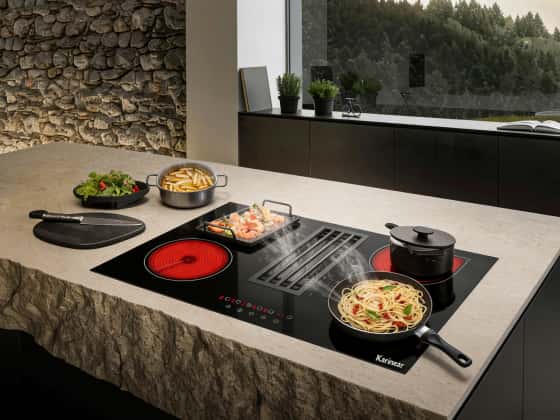






Large kitchen islands and open-concept layouts are now the norm rather than the exception in today's kitchen design trends. Clean sightlines, smooth transitions between the kitchen and living areas, and appliances that support both functionality and beauty are what homeowners want.
The conventional above range hood, however, frequently obstructs this perspective.Bulky ceiling-mounted hoods can obstruct views, physically burden the area, and need expensive ductwork, especially in island kitchens. For this reason, a downdraft cooktop is becoming more popular among designers and homeowners as a useful and stylish substitute.
The popularity of downdraft electric cooktops, particularly ductless versions, and their suitability for contemporary island kitchen renovations are discussed in this article.
Why Overhead Range Hoods Don’t Work Well in Island Kitchens
In modern homes, the kitchen island often serves multiple purposes: cooking, casual dining, entertaining, homework, and remote work. Maintaining open visibility across the space is a key design goal.
Installing a conventional island range hood can create several issues:
-
Blocks sightlines between kitchen and living areas
-
Disrupts open‑concept flow
-
Adds visual bulk to otherwise minimal interiors
-
Requires ceiling and roof ducting
From a layout standpoint, overhead ventilation often contradicts the very reason homeowners choose an island kitchen.
A downdraft cooktop solves this by pulling smoke, steam, and odors downward at the cooking surface, keeping the space visually open and uncluttered.
What Is a Downdraft Cooktop?
A downdraft cooktop integrates a ventilation system directly into the cooking surface. Instead of rising into a hood, cooking fumes are captured near the pan and filtered internally or exhausted through a base vent.
Key advantages include:
-
No overhead hood required
-
Cleaner, more open kitchen design
-
Ideal for kitchen islands
-
Compatible with ductless (recirculating) installation
For homes where structural changes are expensive or restricted, this approach offers clear benefits.

Why Ductless Downdraft Cooktops Make Sense
Installing traditional ducted ventilation can be costly, especially in renovation projects. Moving or adding venting often involves:
-
Cutting ceilings or exterior walls
-
Roof penetration and flashing
-
Electrical and drywall work
Labor and materials alone can easily exceed several thousand dollars.
A ductless downdraft cooktop avoids these challenges by using internal filtration and recirculation:
-
No exterior venting required
-
Minimal structural modification
-
Suitable for condos, apartments, and townhomes
-
Faster and more cost‑effective installation
This makes ductless downdraft systems especially appealing for remodels and retrofit projects.

Karinear 30 Inch Downdraft Electric Cooktop: Practical Features
Among budget‑conscious options, the Karinear downdraft electric cooktop is designed to balance performance, compatibility, and installation flexibility.
Electric Ceramic Cooktop (Pan‑Friendly)
Unlike induction cooktops, electric ceramic cooktops work with all heat‑resistant cookware, including stainless steel, cast iron, and copper. This eliminates the need to replace existing pots and pans—an important consideration for many households.
Four Cooking Zones for Everyday Use
With four heating zones, the cooktop supports multitasking for daily meals or family gatherings. Power levels range from gentle simmering to rapid boiling, covering common American cooking needs.
Integrated Downdraft Ventilation
The built‑in downdraft fan captures smoke and odors at the source, helping reduce grease buildup and lingering smells in open spaces. Because the intake is close to the cookware, ventilation is efficient without dominating the room.
Easy Cleaning and Maintenance
A smooth glass surface allows for quick wipe‑down cleaning. The downdraft filter is accessible for routine maintenance, avoiding the inconvenience of cleaning ceiling‑mounted hood filters.
Cost and Value Considerations
Downdraft cooktops from premium appliance brands often exceed $2,000 in the market, not including installation.
Karinear offers a more accessible alternative by:
-
Providing downdraft functionality at a lower price point
-
Reducing installation costs through ductless compatibility
-
Supporting island kitchens without overhead ventilation
This makes it suitable for homeowners seeking modern kitchen design without premium‑brand pricing.
Who Should Consider a Downdraft Cooktop?
A downdraft electric cooktop is a strong option for:
-
Island kitchen layouts
-
Open‑concept homes
-
Condos or apartments with venting restrictions
-
Remodel projects with limited structural flexibility
-
Homeowners prioritizing clean, minimal aesthetics
Final Thoughts
As kitchen design continues to favor openness and flexibility, ventilation solutions must evolve accordingly.
A downdraft cooktop—especially a ductless electric model—offers a practical way to maintain clean sightlines, simplify installation, and control renovation costs.
For island kitchens where overhead hoods feel intrusive or impractical, downdraft systems provide a balanced solution that aligns with both modern design and real‑world constraints.