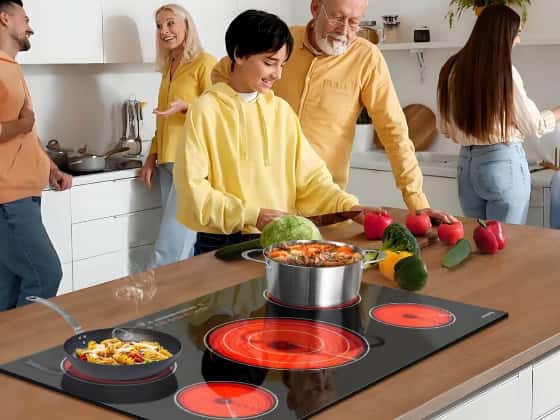
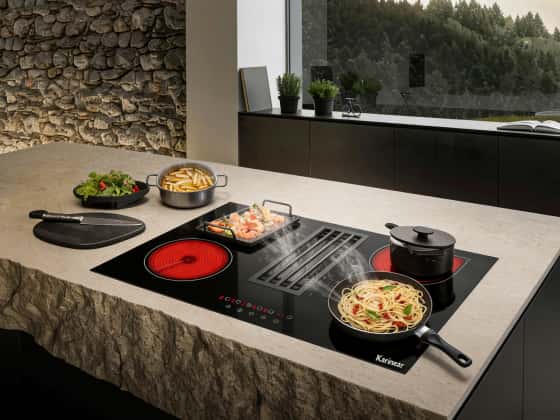


A four-burner surface in a 24 inch footprint can cook a full meal, but it rewards planning. The goal is not to place the four largest pans you own on the glass at once. It is to match each task to the right zone, start long-cooking foods first, and keep every pan flat, stable, and centered.
Use this workflow to get more from a 24 inch 4 burner electric cooktop without turning dinner into a puzzle of crossed handles.
Start With the Pan Base, Not the Pan Rim
Radiant ceramic zones transfer heat through the glass into the bottom of the cookware. The flat base should be close to the diameter of the marked cooking zone. A pan with a flared rim may look large but still have a modest base; a straight-sided stockpot may occupy more usable zone space than expected.
Before cooking, group cookware into three roles:
• Large active pan: skillet, sauté pan, or pot used for boiling.
• Medium support pan: saucepan, steamer, or smaller frying pan.
• Small low-attention pan: sauce, milk, butter, or a gentle simmer.
Reserve the largest or expandable zone for the task that needs the strongest heat or widest base.
Assign Every Zone a Job
A simple four-zone plan prevents mid-meal reshuffling:
1. Put the long-simmering pot on a rear zone.
2. Put the most active sauté or fry task on a front zone.
3. Use the second rear zone for a low-attention side dish.
4. Keep the remaining front zone for a short, high-attention task.
This arrangement keeps stirring and flipping close to you while moving steam and long cooking times toward the back. Exact zone sizes differ by model, so let the marked element diameter override the general rule.
Stagger the Start Times
Four burners do not need to be at maximum power simultaneously. Start the slowest task first, then layer in the others.
For a typical dinner:
• Start rice, potatoes, or a soup base.
• Prepare and begin the protein.
• Add the vegetable when the protein is underway.
• Finish the sauce or warm a side during the final minutes.
Staggering reduces crowding because lids, spoons, and ingredients are not all moving at once. It also lets you lower completed foods to a gentle setting while the final component finishes.
Control Handle Traffic
Handles cause more crowding than pan bodies. Point handles toward the sides or diagonally inward where they cannot be bumped. Keep them away from the aisle and do not extend them over another active zone.
If two long handles cross, rotate one pan only if its base remains centered. Never balance a pan partly off the cooking zone simply to make a handle fit.
Use Medium Cookware for Parallel Meals
One oversized skillet can block two zones on a compact cooktop. When cooking four items, use cookware sized to the portion. A medium saucepan often boils vegetables faster and fits better than a large stockpot filled only one-third full.
Use the largest pan when its surface area is essential—for example, searing without crowding food. For sauces, grains, reheating, and steaming, choose the smallest stable pan that holds the food safely.
Let Expandable Zones Do the Flexing
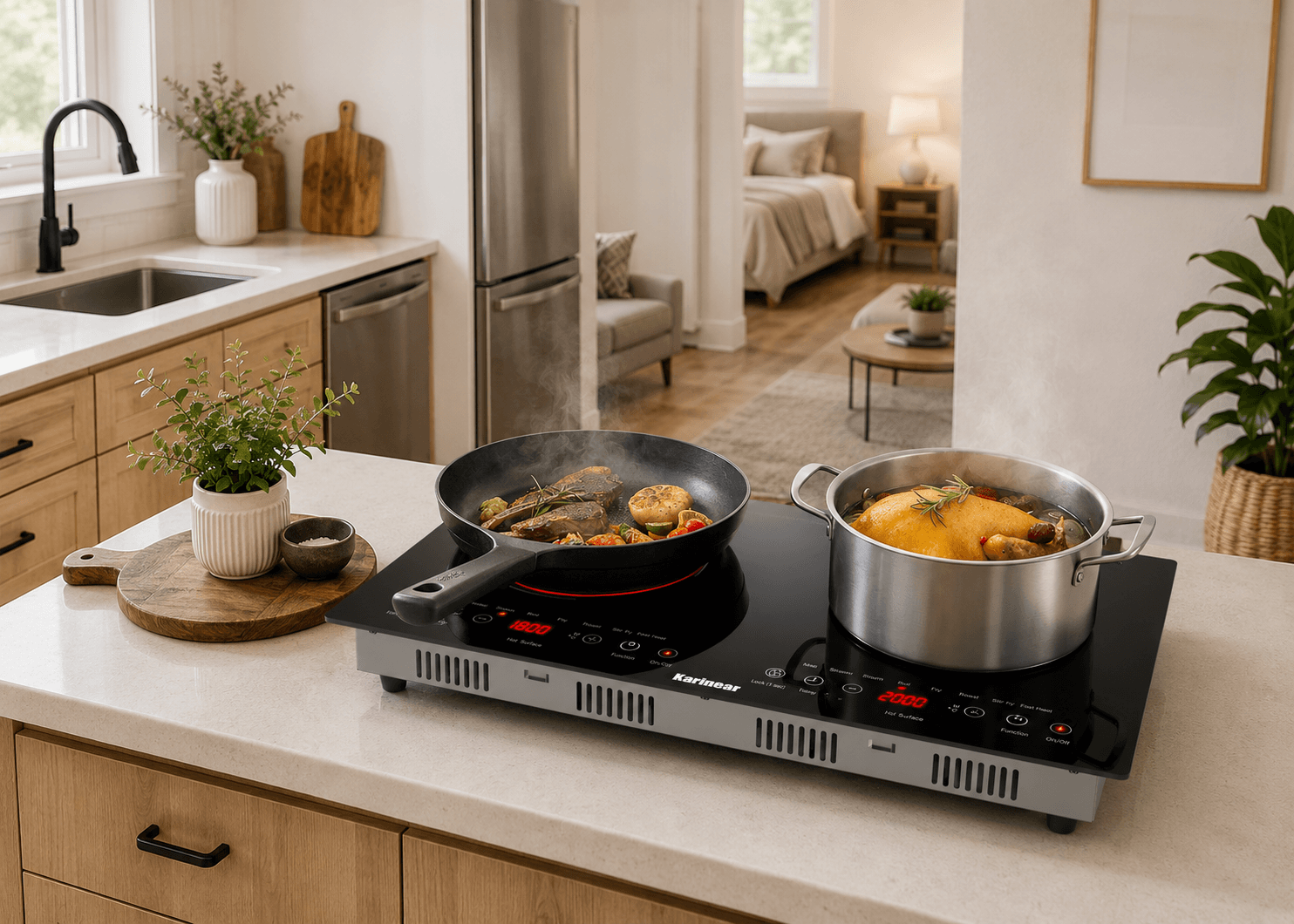
Selected Karinear 24 inch ceramic cooktops include dual-ring or expandable zones. Activate the larger ring only when the cookware base needs it. Matching the heated area to the pan helps use the surface efficiently and reduces unnecessary heat around a smaller vessel.
Remember that a radiant element may cycle on and off to regulate heat. The red glow does not need to remain constant for the zone to keep cooking.
Keep the Control Area Clear
Do not let a pan or wet utensil cover touch controls. Wipe spills after the surface is safe to clean, and use the control lock according to the manual when cleaning a touch-control model.
With knob controls, keep handles and towels away from the knobs. The advantage of a tactile interface is easy adjustment, but only when the control area remains accessible.
A Sample Four-Pan Dinner Layout
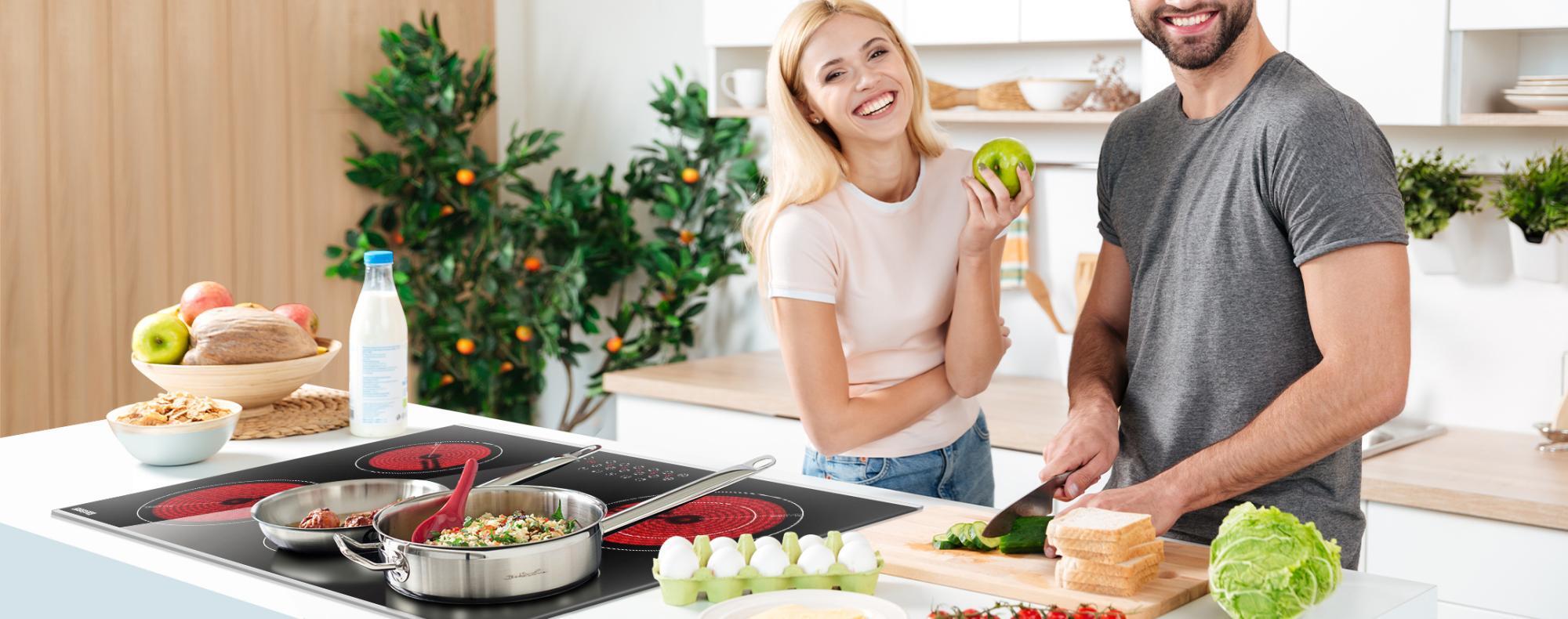
Imagine chicken in a medium skillet, rice in a saucepan, green beans in a small pot, and a pan sauce.
• Place the chicken on the largest front zone.
• Place rice on a rear medium zone and reduce the power after it reaches a boil.
• Place green beans on the other rear zone.
• Use the remaining front zone for sauce during the final stage.
The cookware is moderate in diameter, active tasks are at the front, and the two longest tasks sit at the back. This is the kind of meal a compact four-zone surface handles well.
When to Step Up to 30 Inches
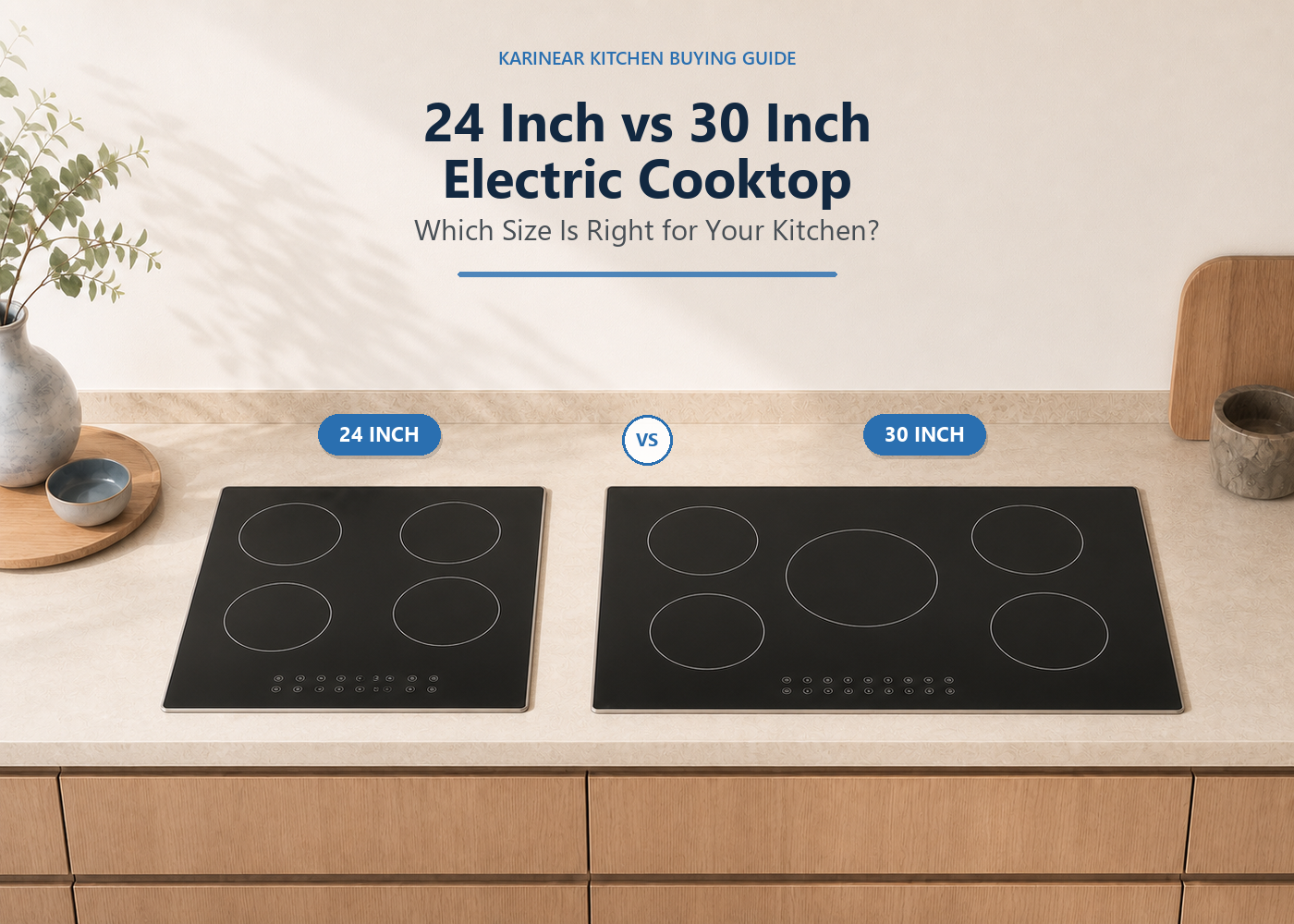
A 24 inch cooktop may feel tight if you regularly use two wide skillets, an oversized stockpot, a griddle, or cookware with long fixed handles. If your normal pans cannot sit centered on separate zones, a 30 inch surface is a better solution than forcing an unsafe layout.
Final Takeaway
To cook with four pans on a 24 inch electric cooktop, match pan bases to zone sizes, assign tasks before turning on the heat, stagger start times, and protect the control area. The compact surface becomes much more capable when every zone has a deliberate role.
Explore Karinear 24 inch four-burner ceramic cooktops with knob, touch, and slider controls to find a layout that fits your pans and cooking rhythm.
Frequently Asked Questions
Can pans overlap the marked circles on a ceramic cooktop?
The pan rim may extend beyond a circle, but the flat base should sit centered and closely match the heated zone. Do not let cookware overlap another active pan or cover the controls.
Why does the burner turn red and then go dark while cooking?
Radiant elements commonly cycle to maintain the selected heat level. Follow the product manual if a zone does not heat normally or displays an error.
What pan material works on a ceramic electric cooktop?
Many flat-bottom cookware materials can work, including common stainless steel, aluminum, cast iron, and heat-resistant glass or ceramic where the cookware maker approves cooktop use. Smooth, flat bases deliver the best contact.